
Australian Roofs are constructed using many different materials – scroll down to find yours and read about repairs and maintenance required.
Tiled Roof
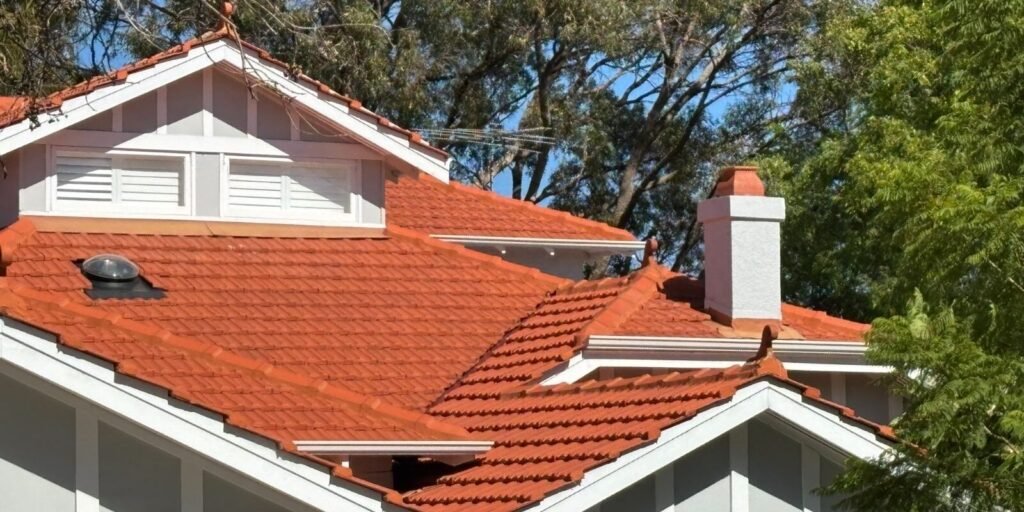
A tiled roof in Australia is a common sight, handed down from our European roots. The tiles have changed slightly over the years. Early English tiles were originally hand-cut from slate, a naturally occurring stone that was easy to mine and process into small, regular thickness flat tiles. Slate Craftsmen were skilled enough to form a weatherproof roof for your house.
The modern roof tile falls into basically 2 types: the clay/terracotta tile or the cement/concrete tile. Historically, the clay/terracotta was formed with wet clay andthen baked in a kiln at high temperatures. This would quite often cause the tile to warp slightly, and when laid on the roof, they wouldn’t sit flat. The modern clay/terracotta tile has been improved, and they are all made flat and identical to each other.
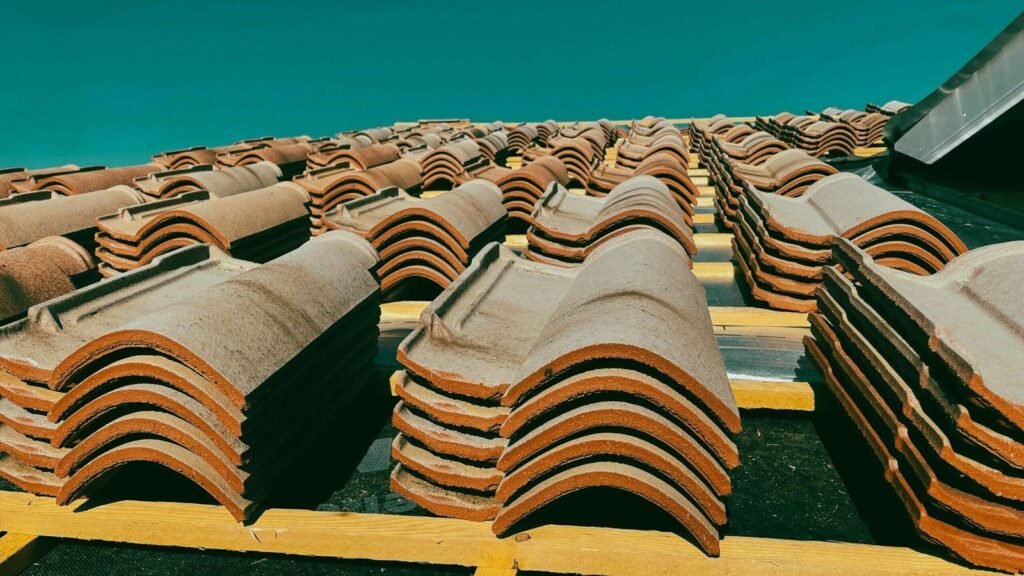
The cement/concrete tiles are made identically to each other as they are produced using a form of mould for high production. The more recent cement/concrete tiles are slightly stronger than the originals due to the improvement in the materials, and they are able to offer a bigger range of colours compared to the clay/terracotta tiles. One downside with the cement/concrete tiles is that they are marginally heavier than the clay/terracotta meaning that the roof structure must be constructed with this in mind.
Roof tiles in general shouldn’t be repaired – replacement of damaged or worn tiles is recommended. Clay/terracotta tiles often start to suffer from an age-related surface degradation where the outer “skin” of the tile gradually powders, pits, and flakes away. It’s most common on older, kiln-fired clay tiles exposed to decades of weather. In hotter dryer climates it can be spotted early on the underside of the tiles.
You generally cannot reverse fretting, but you can slow it:
Avoid pressure washing (this accelerates surface loss)
Keep gutters clear (reduce standing water)
Remove heavy moss carefully (low-pressure methods only)
Improve roof ventilation
Replace severely degraded tiles
Corrugated Iron and Colorbond

One of the most recognisable building materials of early Australian colonisation was corrugated iron. Originally developed in Britain in the 19th century for roofing, it proved highly adaptable in Australia’s harsh and remote conditions. Its lightweight form made it easy to transport, and it was widely used not only for roofing but also for wall cladding, sheds, fences, and rural outbuildings. Over time, advances in galvanising and protective coatings led to the development of modern pre-painted steel roofing products designed specifically to withstand Australia’s intense sun, coastal exposure, and extreme weather.
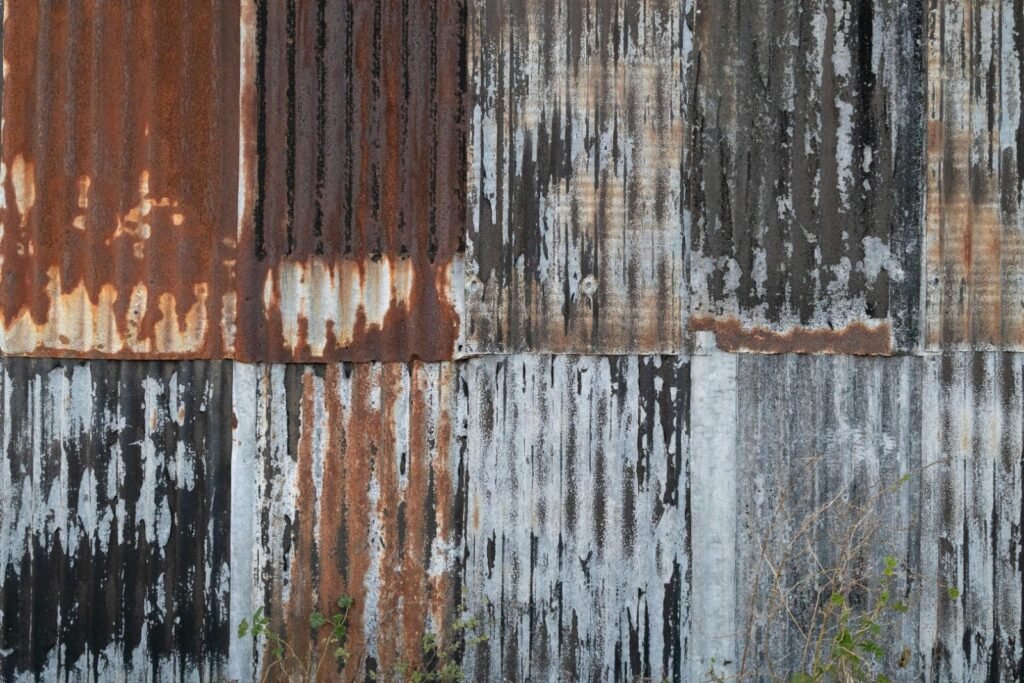
Modern corrugated steel roofing in Australia typically consists of zinc-aluminium coated steel (such as Zincalume) or pre-finished systems like Colorbond. These products offer superior corrosion resistance, colour durability, and thermal performance compared to early galvanised iron. In coastal areas, regular maintenance is essential to remove salt deposits that accelerate corrosion. Common repairs include replacing deteriorated fasteners, resealing flashings, treating minor rust at cut edges, and addressing sheet lap leaks. Screws with neoprene washers often require replacement after 10–20 years as washers perish under UV exposure. Periodic inspection every two to three years, especially after severe storms, helps identify loose sheets or lifted fixings. When properly maintained, modern coated steel roofs can achieve service lives exceeding 30–50 years in many Australian environments.
Composite Synthetic Slate

This roofing product is a Synthetic (composite) slate tile, a manufactured product designed to replicate the appearance of natural quarried slate while reducing weight and improving durability. Unlike natural slate, which is a dense metamorphic stone, synthetic slate is typically made from engineered polymers, recycled rubber, plastic composites, and mineral fillers with UV stabilisers. The tiles are moulded to reproduce the textured cleft surface and staggered coursing of traditional slate, but maintain uniform thickness for easier installation. They are significantly lighter than natural slate, reducing structural load requirements, and are generally more impact-resistant, often rated for hail. While offering consistent aesthetics and simplified handling, performance depends on formulation quality, UV stability, and correct installatio,n allowing for thermal movement. Service life commonly ranges from 30 to 50 years.
How It Differs from Natural Slate
| Feature | Natural Slate | Synthetic Slate |
|---|---|---|
| Material | Metamorphic stone | Polymer/rubber composite |
| Weight | Heavy (35–70 kg/m² typical) | 50–75% lighter |
| Thickness | Naturally variable | Uniform |
| Brittleness | Can crack when nailed | Flexible / impact-resistant |
| Lifespan | 75–150+ years | 30–50+ years (brand dependent) |
| Cost | High | Flexible / impact-resistant |
Asbestos Roofing Sheets
History of Asbestos Roof Sheets in Australia
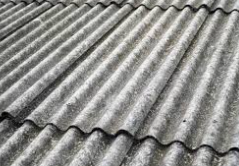
Corrugated asbestos-cement roof sheeting was introduced into Australia in the early 20th century and became especially popular after World War I. By the 1940s–1970s, it was one of the most common roofing materials used for suburban housing, garages, factories, schools, and rural outbuildings. The sheets were manufactured by mixing Portland cement with asbestos fibres (most commonly chrysotile/white asbestos) to create a strong, fire-resistant, lightweight, and relatively inexpensive material that could be moulded into corrugated profiles.
The deeper “Super Six” profile gained popularity because it allowed wider batten spacing and improved water shedding, making it suitable for lower roof pitches. It was particularly prevalent in post-war housing expansion and industrial construction.
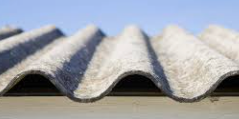
Health risks associated with asbestos exposure became increasingly recognised from the 1960s onward. Australia progressively reduced asbestos use during the 1980s and 1990s, culminating in a complete national ban on manufacture, import, and use in 2003.
Repairing Asbestos Roofing – DON’T
Today, many pre-1990 roofs still contain bonded asbestos-cement sheeting. While generally considered low risk if intact and unweathered, deterioration, drilling, cutting, or high-pressure cleaning can release fibres, and removal must be undertaken in accordance with strict regulatory controls. It is recommended that Asbestos in any form not be repaired or tampered with. Painting or sealing with a PVA adhesive is the only treatment recommended, and this should only be done while wearing the appropriate personal safety equipment. It is highly recommended that all asbestos be removed by a licensed contractor.